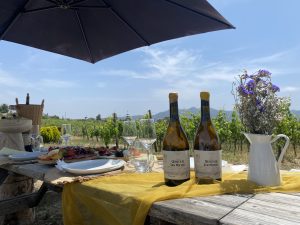
Between the Sintra hills and the Atlantic Ocean lies a small region where vines grow in sand, a few minutes from the sea. Colares wines are among the rarest in Portugal, with a story found nowhere else in Europe. This is where Quinta de San Michel stands, in the village of Janas.
One of Portugal’s oldest wine regions
Colares was demarcated in 1908. In the 1930s its vineyards covered around 1,800 hectares; today only about 25 hectares of sand vineyards remain, squeezed by building along the Sintra coast. That rarity is what makes every bottle of Colares so sought after.
Sand soils and ungrafted vines
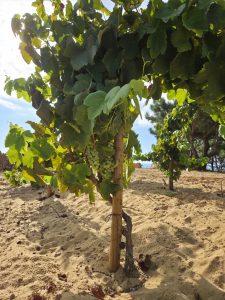
To plant a vine in Colares, growers dig a trench one to four metres deep through the sand until they reach the clay below, where the roots take hold. As the vine grows, the sand is put back.
That sand saved Colares from phylloxera, the pest that wiped out almost every vineyard in Europe in the 19th century: the insect cannot survive in it. So Colares vines can still be planted on their own roots, without American rootstock, as they were before phylloxera. They are among the very few in Europe where this is still possible.
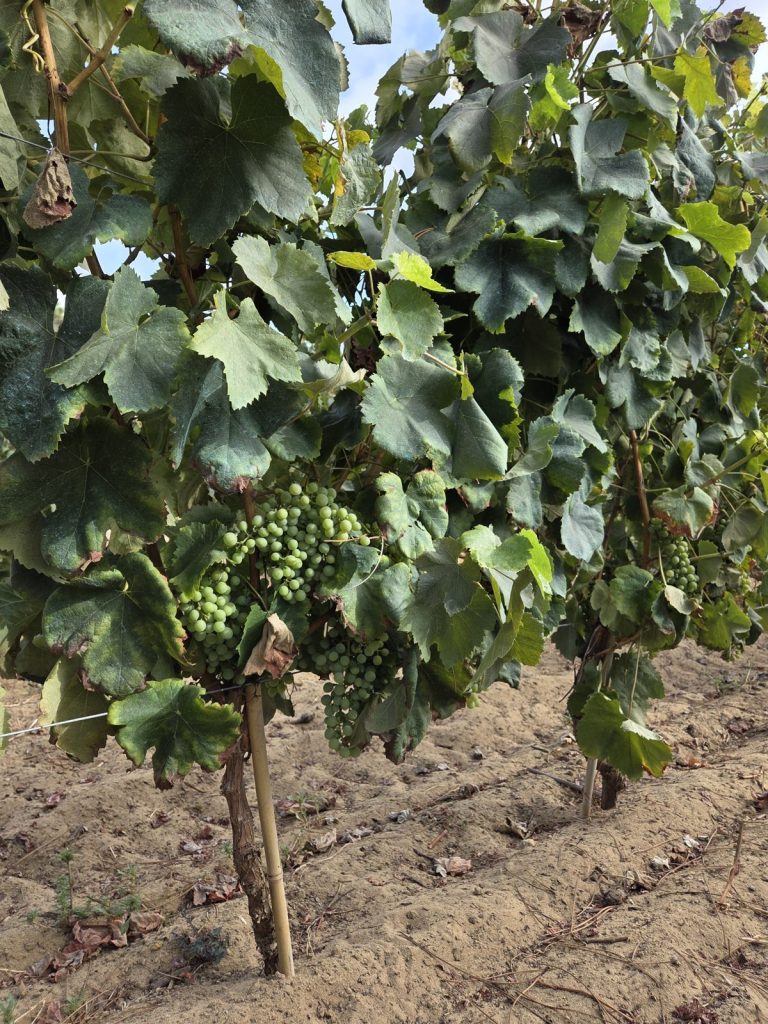
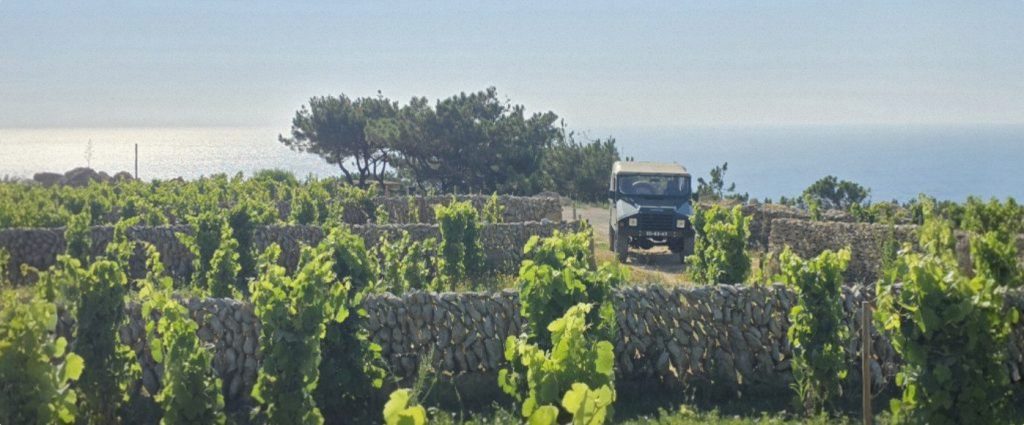
The vines grow low, close to the ground, sheltered from the strong, salty Atlantic wind.
The grapes of Colares
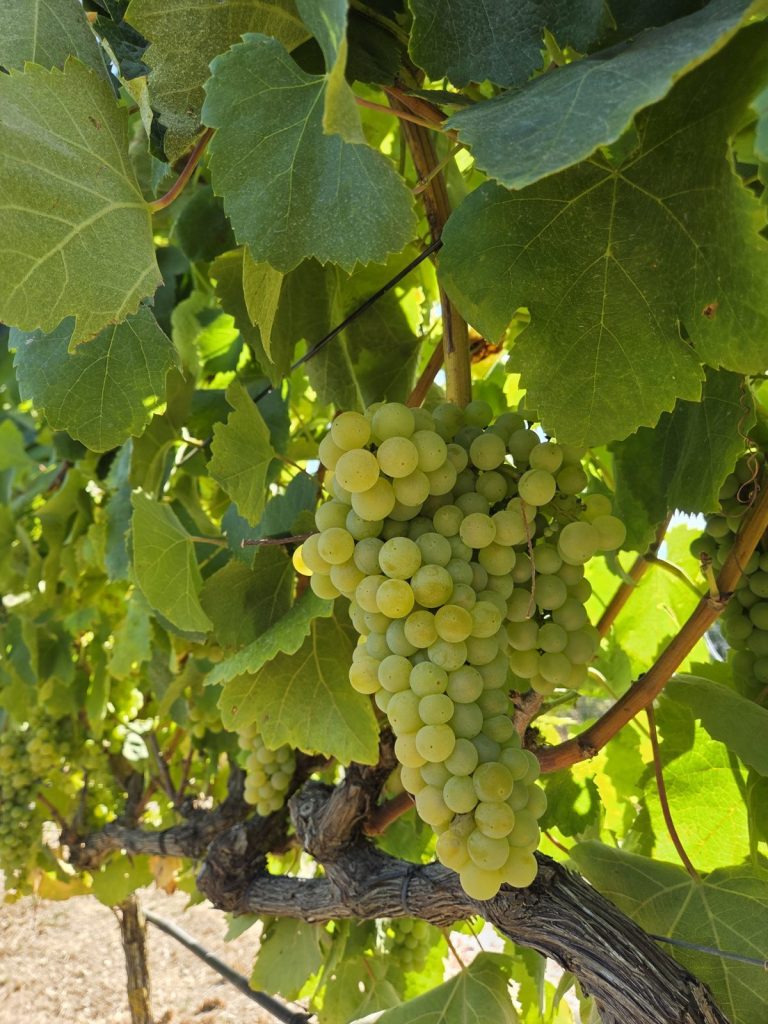
- Malvasia de Colares: the region’s great white grape, giving fresh, mineral wines with a distinctive saltiness.
- Ramisco: the traditional red grape, small-berried and thick-skinned, making firm, tannic reds that improve for decades in bottle.
- Arinto and Galego Dourado: white grapes also traditional around Colares, both grown at the quinta.
The taste of the Atlantic
You can taste the sea in the glass. Colares whites are fresh, taut and almost salty; the reds are firm when young and need time. These are Atlantic wines, with moderate alcohol and great freshness, made for fish, seafood and coastal cooking.
Quinta de San Michel, in Janas
Quinta de San Michel is in Janas, in the Colares area, 40 minutes from Lisbon and five minutes from the beach. Our main vineyard sits on clay-limestone soil, planted with Malvasia de Colares, Arinto and Galego Dourado. We farm with organic practices and feed the vines with horse and sheep manure.
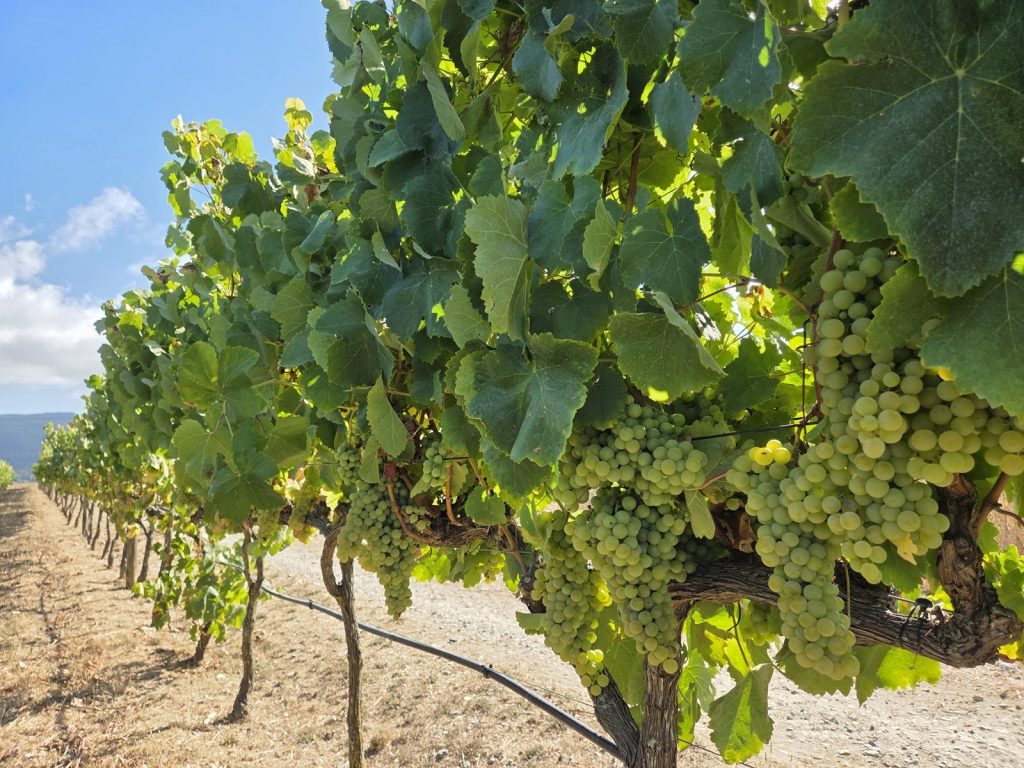
In 2023 we planted new vines in sand, the traditional Colares way, and harvested them for the first time in 2026. Our wines today are Vinho Regional Lisboa, made in Colares from Malvasia de Colares; within about three years, the sand vineyards will give the quinta its first DOC Colares wines.
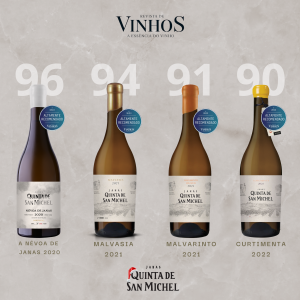
Every wine is released as a small numbered edition, and many are on the lists of Michelin-starred restaurants in Portugal.
Where to taste Colares wine
The best way to understand Colares is to visit. We welcome guests for tours and tastings Monday to Saturday, by appointment: a walk through the vineyard and winery, followed by a tasting of our wines. Soon, our Where the Vine Meets the Atlantic tasting will take guests by jeep to the sand vineyards by the sea.
Frequently asked questions
What is DOC Colares wine?
Wine with the Colares protected designation of origin, made mainly from Ramisco (red) or Malvasia de Colares (white) grown in the sand vineyards of the region demarcated in 1908.
Why are Colares vines ungrafted?
Because phylloxera cannot survive in sand, so the vines can grow on their own roots, without American rootstock, as in Europe before the 19th century.
Are Quinta de San Michel wines DOC Colares?
Not yet. Today they are Vinho Regional Lisboa, made in Colares from Malvasia de Colares. Our sand vineyards, planted in 2023, will give the quinta its first DOC Colares wines within about three years.
Where is Colares?
In the municipality of Sintra, between the Sintra hills and the Atlantic, about 40 minutes from Lisbon. Quinta de San Michel is in Janas: Estrada de Janas 96, 2710-265 Sintra, Portugal.