Between the Serra and the sea,
a vineyard that endured.
Colares is one of the oldest and most singular wine regions in Portugal. Ungrafted vines in sand, grapes found nowhere else and wines that ask for time.
Colares lies where the Sintra hills run down to the Atlantic. The region has two types of soil: sand, by the sea, and clay-limestone (known locally as chão rijo) further inland. Its own grapes are Malvasia de Colares, a white, and Ramisco, a red.
Planting in sand was always hard work. A trench was dug down to the clay, sometimes several metres deep, and the vines grow low along the ground, sheltered from the sea wind by stone walls and cane fences. It was this sand that saved Colares from phylloxera.
Few vineyards like these remain today, and every bottle of Colares is rare. Quinta de San Michel was born on the clay-limestone soils of Janas and, in 2023, returned to planting in sand to carry this story forward.
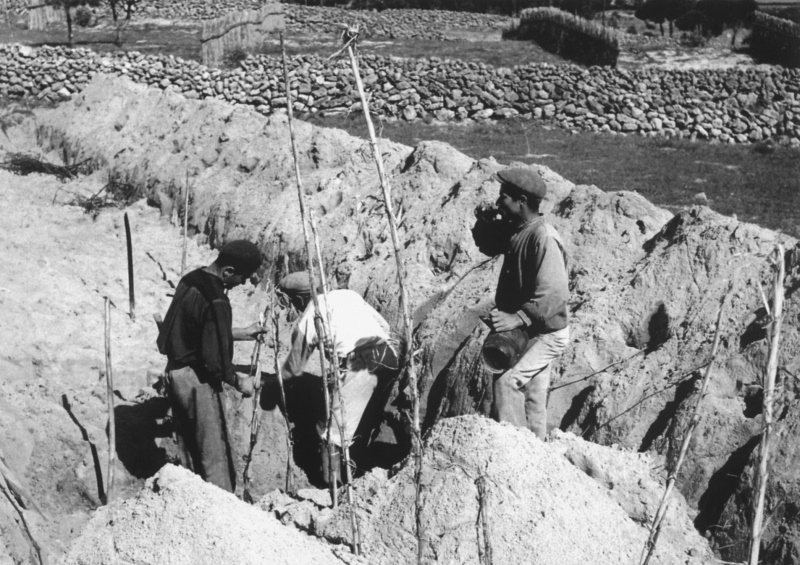
- Late 19th centuryPhylloxera destroys the vineyards of Europe. In the sand of Colares the insect cannot survive, and the vines stay on their own roots, ungrafted.
- 1908Colares becomes a demarcated region, one of the first in the country.
- 1931The Adega Regional de Colares is founded.
- 2013Quinta de San Michel plants its first vineyard, in Janas.
- 2023The Quinta returns to sand, with three new vineyards by the sea.
